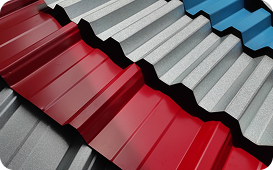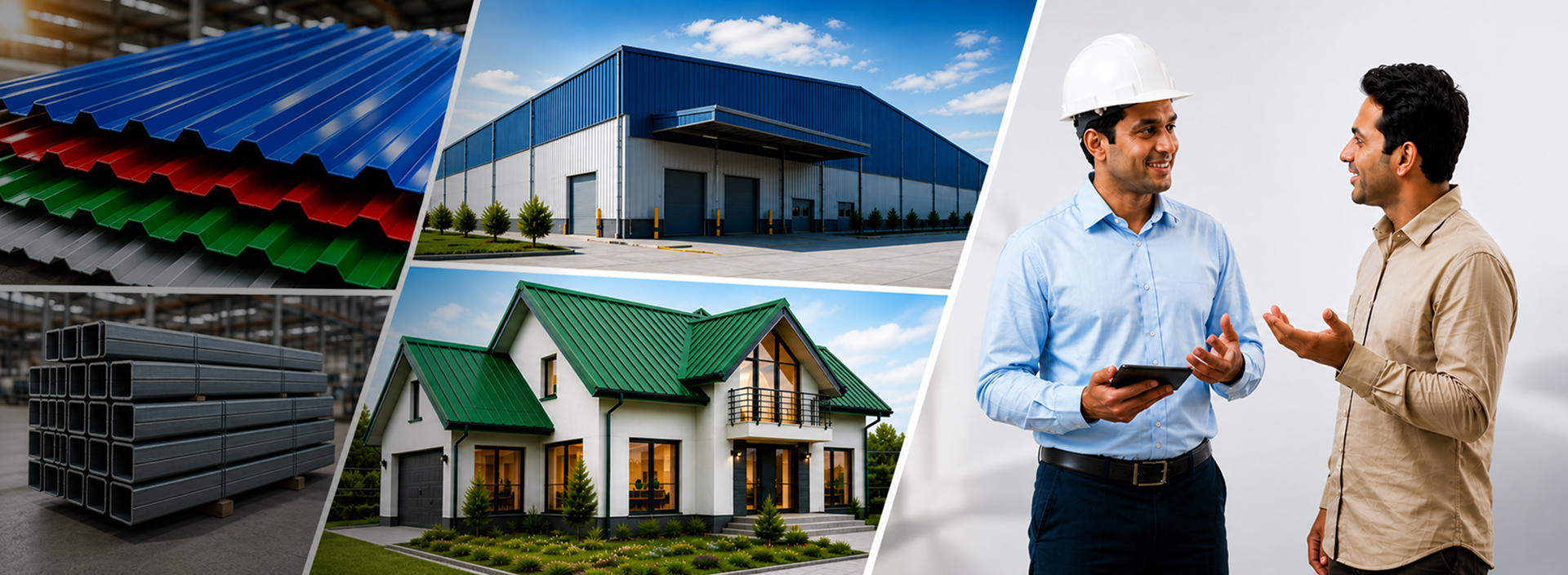
Colour-coated roofing sheets are pre-painted steel sheets designed for roofing and cladding applications. They offer high durability, corrosion resistance, and long-lasting colour retention, making them ideal for industrial, commercial, and residential buildings.
Modern, durable, and visually appealing - colour-coated roofing sheets are the smart choice for long-lasting roofing and cladding solutions.
PPGI (Pre-Painted Galvanised Iron) uses a zinc coating, whereas PPGL (Pre-Painted Alu-Zinc Coated Steel) uses an aluminium-zinc alloy, offering better corrosion resistance -especially in coastal or humid conditions.
These sheets are typically made from galvanized steel or Alu-Zinc alloy coated steel, with a protective layer of paint applied through a continuous coating process.Coating System typically includes:
Yes, they are designed to withstand extreme weather conditions such as heavy rains, strong winds, and high temperatures. Some coatings also offer UV protection for added longevity.
Certain colour-coated sheets are available with solar-reflective coatings that reduce heat absorption, keeping interiors cooler and lowering energy costs.
The thickness depends on the application:
Yes, but it is recommended to use higher-grade coatings like PVDF paint systems together with appropriate metallic coating mass for enhanced corrosion resistance in such environments.
Yes, in many cases they can be installed over existing structures, provided proper support and alignment are ensured.
The recommended minimum roof slope depends on the sheet profile and manufacturer's installation guidelines. A minimum slope (typically around 5 - 10 degrees, depending on profile) is recommended to ensure proper water drainage.
Yes, they can be roll-formed, curved, or customized depending on the project requirements and profile type.
The cost varies based on the material, thickness, coating type, and design. While they may have a higher upfront cost than some traditional materials, their longevity and low maintenance make them cost-effective over time.
Yes. Our Jindal Sabrang and Jindal Neucolor+ range come with manufacturer warranties, with duration varying by product type and specification. Jindal Neucolor+ comes with a 15-year warranty, while Jindal Sabrang carries a warranty of 7 years.
They are installed using self-drilling screws, ensuring a secure and leak-proof fit. Proper sealing and overlap are essential to prevent water ingress.
Yes, these sheets are versatile and can be used for wall cladding, providing both functional and aesthetic benefits.
Jindal (India) Ltd. offers premium-quality colour-coated roofing sheets manufactured with advanced technology and strict quality standards. Our products are durable, stylish, and eco-friendly, making them a reliable choice for all your roofing needs.
We offer a wide range of pre-painted and bare metal roofing solutions, including colour-coated galvanized and Zinc-Aluminium sheets, specially designed for industrial, commercial, agricultural, and residential applications.
Our colour-coated sheets undergo a comprehensive series of quality tests to ensure performance, durability, and compliance with standards. These tests typically include:
Steel sheets are the preferred choice for sandwich panels because they provide excellent strength, durability, and protection. High-quality pre-painted galvanized (PPGI) or Alu-Zinc Coated Steel (PPGL) facings offer superior corrosion resistance, ensuring long service life even in harsh environments. Steel also delivers consistent flatness and dimensional accuracy, making fabrication and installation easier.
Aluminium-Zinc coated steel is a carbon steel substrate coated with an alloy of aluminium (typically ~55%), zinc (~43.5%), and silicon (~1.5%). This combination offers superior corrosion resistance and heat reflectivity compared to conventional galvanized steel.
Galvanized steel uses only zinc coating, while Aluminium-Zinc steel uses an aluminium-zinc alloy. The aluminium provides barrier protection, while zinc offers sacrificial protection -resulting in better overall durability.
Yes, it performs better than galvanized steel in coastal and humid environments. However, for highly aggressive marine conditions, additional coatings or paint systems are recommended.
Yes, it can be pre-painted (PPGL) or post-painted. Pre-painted versions offer enhanced aesthetics and additional protection.
Yes, it is often used in its bare metallic finish, which offers a distinctive look along with durability.
Our Al-Zn coated steel is ideal for:
Al-Zn coated steel offers superior corrosion resistance compared to regular galvanized steel, ensuring long-term durability and low maintenance even in harsh outdoor environments.
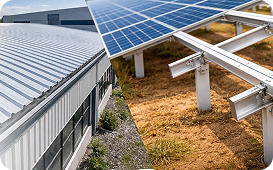
Jindalume (aluminium-zinc coated steel) is an ideal material for solar mounting structures due to its high corrosion resistance, durability, and strength-to-weight ratio. It performs exceptionally well in outdoor conditions, including high heat, humidity, and industrial environments - ensuring long-term structural reliability for solar installations. Its superior reflectivity also helps reduce heat build-up, while its low maintenance requirement and long service life make it a cost-effective choice over the project lifecycle.
Jindalume (aluminium-zinc coated steel) is widely used in appliances because it offers excellent corrosion resistance, heat resistance, and durability. It performs reliably in high-temperature and moisture-prone environments - making it ideal for products like air conditioners, refrigerators, washing machines, ovens, and water heaters. Its smooth surface finish also supports better coating adhesion and aesthetics, while its strength and formability enable precise manufacturing of appliance components.
Our pipes are used in oil and gas transmission pipelines, distribution networks, gathering lines, slurry pipelines, and structural applications in oil and gas facilities.
Yes. Our pipes can be supplied with various internal and external coatings (e.g., FBE, 3LPE) to enhance corrosion resistance and extend service life.
Absolutely. We maintain stringent quality controls, with products conforming to API, ASTM, and other relevant global standards, backed by thorough testing and certification.
Our pipes undergo rigorous testing, including:
Yes. We have the production capacity and logistics support to meet bulk requirements for major pipeline projects, both in India and for export.
ERW (Electric Resistance Welded) pipes are steel pipes made by rolling metal and welding it longitudinally. They are known for uniform wall thickness, strong weld seams, and cost-effective production.
Yes. Our galvanized (GI) pipes have a uniform zinc coating that protects against rust and corrosion, ensuring long service life in outdoor and wet environments.
We conduct rigorous quality checks, including:
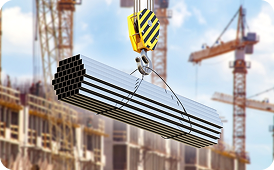
Hollow section pipes are steel tubes with a hollow cross-section, typically square or rectangular. They offer excellent strength-to-weight ratios and are widely used in construction and structural engineering.
Yes. Our pipes are manufactured with excellent weldability and dimensional consistency, making them easy to process, assemble, and install.
Our products undergo rigorous quality tests, including:
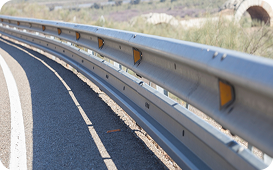
Metal beam crash barriers are vital road safety systems designed to keep people or vehicles from straying into off-limits areas and to provide railing protection to motor vehicles in areas such as steep slope, high embankment, obscure curve/ bend or sharp corner, thus preventing accidents and protecting drivers.
There are two main types:
Metal Beam Crash Barrier is required to absorb sudden impact or collision and to minimize injury. It acts as a directional path for moving vehicle, as a protective barrier to avoid pedestrians/ animals and as a visual guide during the bad weather. They create a strong shield against potential hazards, ensuring reliability and maximum protection for drivers and passengers.
Yes. W-beam crash barriers and guardrails are the same and serve the same purpose—protecting vehicles from veering off the roadway during accidents. They are essential safety components across various transportation infrastructures, enhancing road safety and minimizing impact risks.
W-beam crash barriers, made of galvanized steel, are designed to flex and absorb impact energy, safely redirecting vehicles. Concrete barriers, being rigid, can cause harsher impacts and potential vehicle damage. The choice depends on road conditions, traffic flow, and safety needs.
Thrie Beam barriers offer enhanced strength and effectiveness compared to traditional W-Beam barriers. Their additional corrugation increases stiffness, improving vehicle containment and redirection. This design minimizes the risk of smaller vehicles slipping through, making Thrie Beam barriers ideal for applications requiring higher impact resistance and safety.
Engineered for durability and compliance with international standards, Jindal Crashsafe Thrie Beam barriers provide superior strength and reliability across various environments.
Jindal India’s Crash barriers are designed for easy installation across diverse road conditions. We recommend professional installation for optimal alignment and safety and regular inspections to further enhance performance.
Crash barrier maintenance involves regular inspections for damage or wear, ensuring continued reliability. Routine checks, debris removal, and corrosion prevention measures help maintain optimal performance, extending the barrier’s durability and effectiveness.
Jindal Crashsafe Metal Beam Crash Barriers undergo rigorous crash tests to assess deflection, strength, and vehicle containment. Compliance with Indian, American, and European safety standards ensures their reliability and proven effectiveness.
We supply high-quality aluminium foils designed specifically for pharmaceutical packaging applications, ensuring product safety, hygiene, and extended shelf life. Our foils are used for blister packs, strip packs, cold-formed foils, and sachet packaging - protecting tablets, capsules, and powders from moisture, light, and contamination.
Aluminium foil is an effective barrier against moisture, oxygen, light, and bacteria. It preserves drug potency, extends shelf life, and ensures patient safety.
Yes. Our foils comply with relevant pharmacopeia and packaging standards, ensuring suitability for pharmaceutical use.
We follow rigorous quality control processes including Gauge and thickness testing, Pin-hole detection, Adhesion and sealing tests, Visual inspection and Compliance with regulatory guidelines.
Aluminium foil is an excellent barrier against moisture, oxygen, light, and contaminants. It keeps food fresh, preserves taste, and extends shelf life while being safe for direct food contact.
Yes. Our foils are manufactured using food-safe processes and meet regulatory standards for direct contact with food.
We offer a wide range of thicknesses and roll widths to meet diverse food packaging needs. Please check our product section for the comprehensive range offered by us.
Our foils undergo strict quality control, including:
 +91 7605035757